Content Strategy 101: How to Plan Content That Actually Grows Your Business

Amy McGrath • June 18, 2026

Share this article

Most businesses don't have a content strategy. They have a list of blog topics someone thought of on a Tuesday, a sporadic posting schedule, and a vague hope that "more content" will eventually do something for the business. I understand why, building an actual strategy takes more upfront thought than just opening a blank document and writing. But it's also the single biggest difference between content that compounds over years and content that just accumulates.


This guide is the framework I use myself when planning content for clients, stripped down to something any business owner can actually run with, even without a marketing team behind them.

Quick answer:  A content strategy is a plan that connects what you publish to actual business goals, built around audience research, content pillars, and the buyer journey, rather than a list of blog topics picked at random. It needs a clear goal, a defined audience, a content audit, organised topic pillars, a realistic publishing schedule, and a regular review process to actually work.

What Content Strategy Actually Means


A content strategy is simply a plan that connects what gets published to what the business actually needs to happen, more enquiries, more product sales, better brand recognition, fewer repetitive customer questions. It defines who the content is for, what it needs to cover, and how it all fits together, rather than treating each piece as a standalone, disconnected task.


Without one, content tends to drift. A blog goes quiet for three months, then gets a flurry of posts before another gap. Topics jump around with no clear thread connecting them. Nothing builds on anything else. A strategy doesn't need to be complicated, but it does need to exist, even a single page outlining goals, audience and pillars puts a business ahead of most of its competitors.


Why Random, Reactive Content Doesn't Work


  • It doesn't build topical authority. Search engines (and AI tools) increasingly reward sites that demonstrate depth on a subject, a handful of disconnected posts rarely adds up to the kind of coverage that builds genuine authority. Ten posts spread across ten unrelated topics will almost always underperform ten posts that together build a complete picture of three or four core themes.


  • It's exhausting to sustain. Without a plan, every piece of content requires fresh inspiration from scratch, which is precisely why so many business blogs go quiet for months at a time. Decision fatigue, simply not knowing what to write about next, is one of the most common reasons content stops altogether.


  • It misses obvious gaps. Reactive content tends to cover whatever's top of mind, not necessarily what the actual audience is asking or searching for, leaving easy, high-intent topics completely untouched while less useful ones get written instead.


  • It makes results impossible to read. Without a consistent plan to compare against, it's genuinely difficult to know whether content is working at all, there's no baseline, no pattern, just a scattering of individual posts with no shared context to judge them against.


Step 1: Start With Business Goals, Not Content Ideas


Before a single topic gets chosen, get specific about what the content actually needs to achieve. More qualified enquiries for a particular service? Reduced pre-sales questions because the answers already exist on the site? Better visibility for a specific product category? Every piece of content downstream should trace back to one of these goals, if it doesn't, it's worth questioning whether it belongs in the plan at all.


It's worth writing this goal down explicitly, in one sentence, somewhere it'll actually be looked at again. "Generate enquiries for boiler installations in Leeds" gives every future content decision a clear test to be measured against. A vague goal like "get more traffic" doesn't, and tends to produce a strategy that drifts.


Step 2: Understand Who You're Actually Writing For


Vague audiences produce vague content. "Small business owners" isn't specific enough to write confidently for. "A trades business owner who's never had time to think about marketing and is sceptical that content even works" is something you can actually write to directly.


The best source for this, as with copywriting generally, is real customer language, support questions, sales call notes, reviews, and the specific words people use to describe their problem before they've found a solution.


It's also worth being honest about whether there's more than one distinct audience. A business serving both homeowners and landlords, for example, often needs separate pillars or at least separate angles within the same pillar, since the two groups care about quite different things even when the underlying service is identical.

Try this:  Write down the five questions you get asked most often by phone, email or in person before someone becomes a customer. That list is very often the most valuable content plan you'll ever get for free.

Tools You Actually Need (And the Ones You Don't)


A content strategy doesn't require expensive software to run properly. A simple spreadsheet covering pillars, topics, status and publish dates handles most of what a paid content calendar tool promises. Google Search Console and GA4 are free and cover the analytics side entirely adequately for most small businesses. Beyond that, a basic keyword research tool, even Google's own autosuggest and "People also ask" boxes, free of charge, covers genuine research needs without a subscription.


Where it's worth spending money is time, either your own, ring-fenced and protected from being the first thing that gets dropped when things get busy, or a freelancer's, brought in specifically to keep the plan moving when internal capacity inevitably gets squeezed.


Step 3: Audit What You Already Have


Before planning anything new, look honestly at what already exists. Which pages get traffic but no enquiries? Which topics are covered well, and which are missing entirely? Which old posts are outdated and could be refreshed rather than left to quietly underperform? A short audit, even a simple spreadsheet listing every page with its traffic and purpose, usually reveals more useful direction than starting with a blank page.


Step 4: Build Content Pillars


Content pillars are the three to five broad themes everything else gets organised under. For a heating engineer, that might be boiler maintenance, installation and costs, energy efficiency, and emergency repairs. Every individual blog post or page sits under one of these pillars, which keeps the overall site focused and makes internal linking, and topical authority, much easier to build deliberately rather than by accident.


Pillars also make planning considerably faster. Instead of staring at a blank page wondering what to write about next, the question becomes simply: what hasn't been covered yet within these four or five themes.


Step 5: Map Content to the Buyer Journey


Not every piece of content should be trying to sell. Different content does different jobs depending on how close someone is to actually buying, and a strategy should deliberately include all of these stages, not just the bottom one most businesses default to.

Funnel Stage Content Type Example Topic
Awareness Educational blog posts "How often should you service a boiler?"
Consideration Comparison & guide content "Gas vs electric boilers: which is right for your home?"
Decision Service pages, case studies "Boiler installation in Leeds, fixed pricing"
Retention FAQs, maintenance guides "What to do if your boiler loses pressure"

Most businesses over-invest in the decision stage (service pages, pricing) and under-invest in awareness and consideration content that would actually bring new people into that funnel in the first place.


Step 6: Build a Realistic Content Calendar


A calendar's only real job is making the plan sustainable. It's far better to commit honestly to one well-researched, properly optimised piece a month than to plan four a month and quietly abandon the schedule after six weeks. Block out pillars across the months ahead, leave room for seasonal or timely topics, and treat the calendar as a living document, not a rigid contract.


Step 7: Measure, Review and Refine


A strategy isn't a one-off document, it's worth revisiting every quarter. Which pillars are performing? Which topics brought in genuine enquiries rather than just traffic? What's changed in the business, new services, new audience, that the content plan needs to reflect? Treating the strategy as a living plan rather than a document filed away after the first month is what actually makes it pay off over the years content needs to build authority.


How Often Should You Actually Publish?


Consistency matters far more than volume. One genuinely useful, well-researched piece a month, sustained for a year, will outperform an enthusiastic burst of weekly posts that quietly stops after six weeks. If there's any doubt about what's sustainable, plan for less than feels ambitious, and stick to it.


Common Mistakes That Derail a Content Strategy


  • Choosing topics by guesswork instead of research. Writing what feels interesting rather than what the audience is actually asking or searching for.


  • No clear pillars. A scattered topic list with no organising structure makes it harder for both readers and search engines to understand what the site is actually an authority on.


  • An unsustainable schedule. Ambitious plans that ignore the actual time and resource available are the single most common reason strategies get abandoned within a few months.


  • Never revisiting the plan. A strategy written once and never reviewed slowly drifts out of step with what the business and its audience actually need.


  • Treating every piece as standalone. Missing the internal linking and topic-building opportunities that come from treating content as a connected body of work rather than isolated posts.


  • Writing for the business instead of the audience. Content that exists mainly to describe the business, rather than answer something the audience genuinely wants to know, tends to underperform even when it's well written, for the same reasons covered in the website copywriting guide.


Frequently Asked Questions


Do I need a content strategy if I only post occasionally?

Yes, arguably even more so. With limited capacity, it matters more, not less, that every piece of content earns its place. A clear strategy ensures the few pieces that do get published are the ones most likely to actually move the business forward.


How many content pillars should a small business have?

Three to five is usually the sweet spot. Fewer than that can feel limiting, more than that tends to spread focus too thin and slow down the topical authority a strategy is meant to build.


Should a content calendar be planned a month ahead or a year ahead?

A rough yearly view of pillars and seasonal moments, with the next one to three months planned in proper detail, tends to work best. Planning a full year in granular detail rarely survives contact with how a real business actually changes month to month.


What's the most common reason a content strategy fails?

In my experience, it's almost always an unsustainable schedule set at the start, not a lack of good ideas. A realistic, smaller commitment that actually gets kept consistently will always outperform an ambitious plan that collapses after two months.


Can a content strategy work without a blog at all?

Yes. The same pillar and audience thinking applies to service pages, email content, and social posts. A blog is simply the most common format because it's flexible and search-friendly, but the strategic thinking underneath isn't tied to any one content type.


Final Thoughts


A content strategy doesn't need a marketing department or a complicated framework to be worth having. It needs a clear goal, an honestly understood audience, a handful of organising pillars, and a publishing pace that's actually sustainable. Get that foundation right, and every individual piece of content stops being a one-off task and starts being a building block in something that genuinely compounds.

Good content doesn’t happen by accident.

I help businesses turn pages like this into real enquiries, through SEO content, conversion copywriting, and content strategy built around how people actually search.

Work with me

Recent Posts

By Amy McGrath June 18, 2026
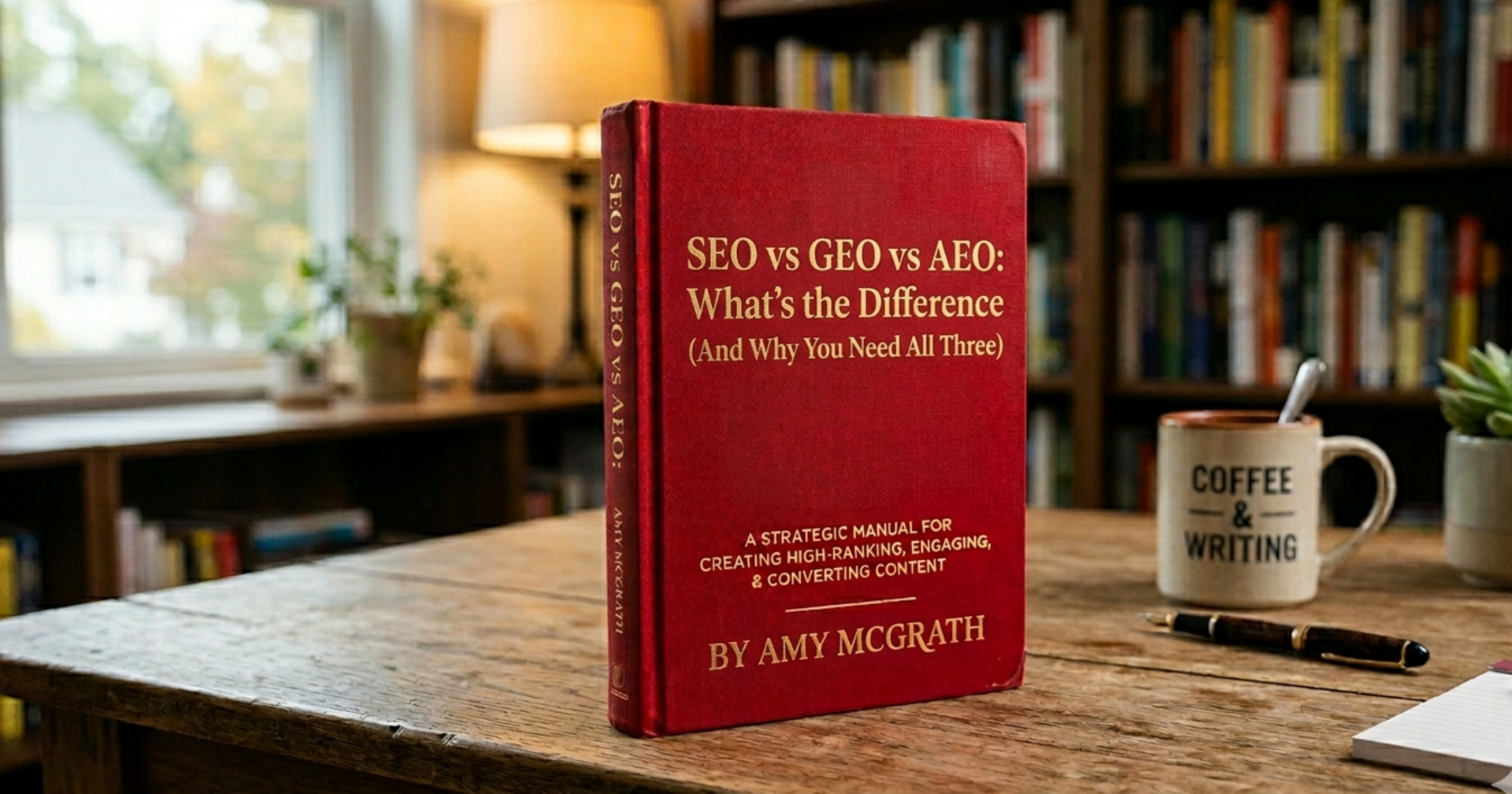
A few years ago, " getting found online " basically meant one thing: SEO . Now I get asked, almost weekly, what GEO and AEO actually mean , whether they've replaced SEO , and whether a business needs to worry about all three or just pick one. Short answer: you need all three , and they're far more connected than the three separate acronyms make them look. This guide breaks down exactly what each one means, where they show up, how they overlap, and what actually changes about the way you write content once you understand the difference.
By Amy McGrath June 18, 2026
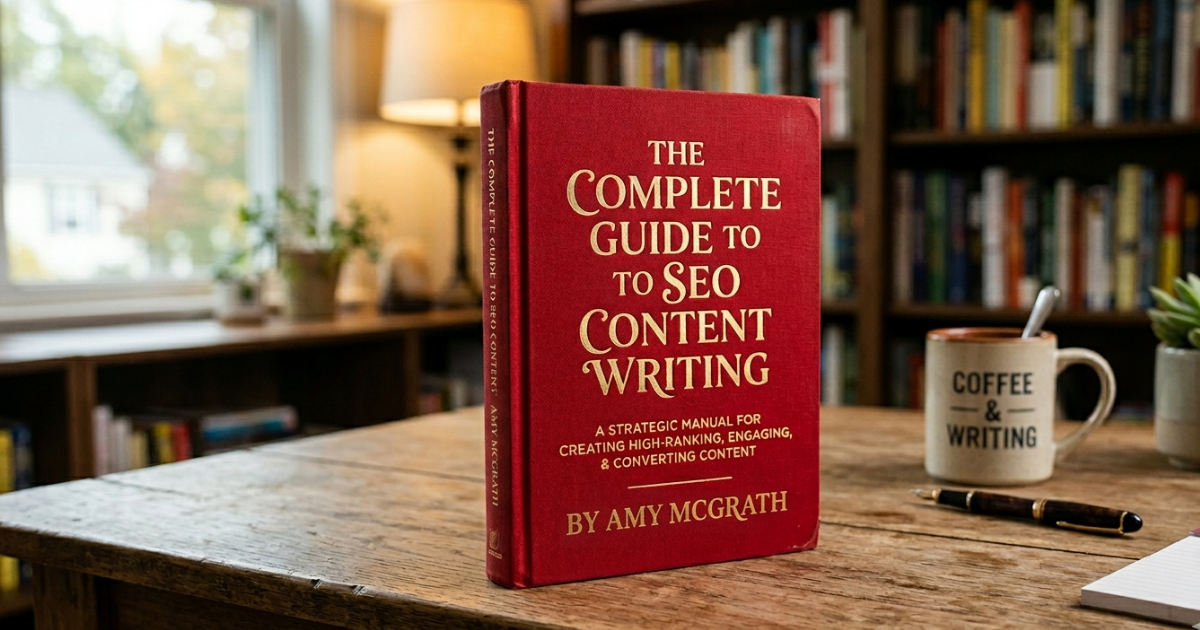
I've been writing SEO content professionally for the last few years, across property, trades, skincare, supplements, beauty and professional services, and if there's one thing client conversations have taught me, it's that almost everyone has heard the phrase " SEO content " and almost no one has actually been told what it involves. I've written elsewhere about why some SEO content earns its ranking and some doesn't , that piece is the philosophy. This guide is the practical follow-up: not why it matters, but exactly how to do it, the process I actually use, the structural and technical foundations underneath it, and the small, easy-to-miss details that turn that philosophy into a page that genuinely performs. If you take nothing else from this guide, take this: SEO content writing isn't a trick for outsmarting Google. It's about being genuinely, demonstrably useful to the person reading, in a format that happens to be exactly what search engines (and increasingly, AI tools) are designed to reward. Get that the right way round, and the rankings tend to follow rather than lead.

By Amy McGrath June 8, 2026
High CTR Hooks, Offer Clarity, Pain Points, Creative Testing and Prompts That Actually Work Here's the uncomfortable reality of running paid ads right now. Everyone has access to AI . Everyone is using it to write copy. And because everyone is using the same tools, trained on the same data, fed the same generic prompts — the ads flooding every feed are starting to sound identical. Same hooks. Same structure. Same 'Are you tired of [problem]? Introducing [solution].' Same energy. Same wallpaper. Which, if you think about it, is actually good news for anyone willing to put a bit more thought in. AI hasn't made great ad copy obsolete. It's made lazy ad copy invisible. The bar for stopping the scroll has gone up, not down — and the brands that understand that are cleaning up while everyone else wonders why their CPMs keep climbing and their CTRs keep sinking. This is about writing ad copy that cuts through. The hooks, the offer framing, the pain points, the testing frameworks, and how to use AI as a proper creative tool rather than a glorified copy-paste machine.

By Amy McGrath May 19, 2026
Let's be blunt about something. There's probably a version of your product page sitting right now at a decent ranking, getting reasonable traffic, and quietly bleeding sales because the copy is doing absolutely nothing. Not bad copy, necessarily. Just... copy. Words that exist. Manufacturer descriptions rephrased slightly. Dimensions listed. Stuff in a bullet list that nobody asked for. The hard truth is that most ecommerce businesses put enormous effort into getting people to the product page — ads, SEO, influencers , the lot — and then hand them a description that reads like it was written for a stock database. And then wonder why the conversion rate is stuck at 1.8%. Product description optimisation isn't really about writing. It's about removing every possible reason someone might not buy. Handle the objections. Build the trust. Make the decision feel easy. Do all of that while keeping Google happy, and you've got a page that works around the clock without you having to touch it. Here's how that actually looks in practice.

By Amy McGrath May 19, 2026
What Actually Brings Clicks, Leads, and Trust Most people treat SEO like a numbers game. Chase the keyword, hit the word count, grab the ranking, done. But here's the uncomfortable truth: a page can sit at position one and still fail completely. No clicks. No leads. No trust built. Just a metric that looks good in a report nobody reads twice. Real SEO content does three things at once — it earns the ranking, compels the click, and converts the reader into someone who actually does something. Getting all three right requires a different way of thinking about content from the very start. This is that guide.
By Amy McGrath May 14, 2026
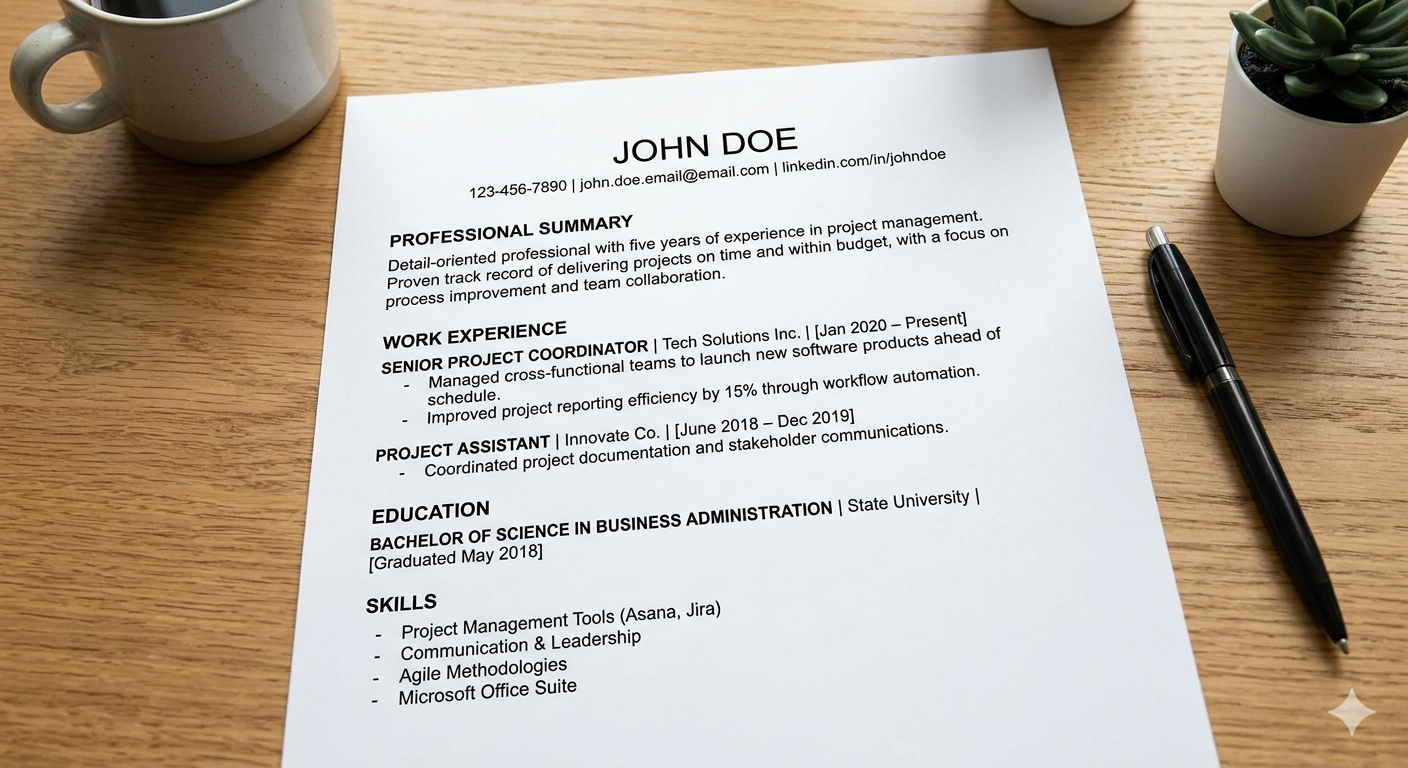
You spend ages on your CV. You tidy the font, rewrite the bullet points, move sections around and try to make everything sound sharper. Then you apply for a role that looks right for you and hear absolutely nothing back.  That silence can feel personal, but it is not always a sign that you are underqualified. Sometimes the issue is much simpler: your CV was not read properly by the system before a recruiter ever had the chance to look at it. Applicant Tracking Systems , usually shortened to ATS, are now part of normal online recruitment. They collect applications, extract candidate details, search for keywords and help employers shortlist faster. The important point is this: your CV now has two audiences. It has to be easy for software to scan, and it still has to sound clear, credible and human when a real person opens it. This guide walks through the practical bits that matter: layout, formatting, keywords, section headings and the simple checks you can run before sending your next application.
By Amy McGrath May 13, 2026
You've spent years building skills, climbing ladders, and collecting achievements. Then you condense it all into two pages — and hear nothing. That silence is the most common experience in modern job searching. According to Forbes, less than 3% of submitted CVs result in an interview. The problem, more often than not, isn't who you are. It's how your CV presents you. Here are 15 evidence-based fixes that make the difference.

By Amy McGrath May 8, 2026
Getting people to visit your website is only the first step. The real growth comes from what happens next: do they remember you, trust you, come back, sign up, enquire, buy, or recommend you?  Website traffic is valuable, but repeat attention is more valuable . A visitor who returns three, four or five times is far more likely to become a customer than someone who lands once and disappears. That is why smart brands build systems to keep in touch with visitors after the first click.

By Amy McGrath May 8, 2026
Writing blog posts that increase site traffic is not about filling a page with keywords and hoping Google notices. Strong blog content works because it answers a real question, gives useful detail, and makes the reader want to stay, click, save, share, or enquire. Google describes good SEO as helping search engines understand your content while helping users decide whether they should visit your site. That means your blog post needs to serve both sides: the person reading it and the search engine trying to understand it.