SEO Content That Does More Than Rank

Amy McGrath • May 19, 2026

Share this article

What Actually Brings Clicks, Leads, and Trust


Most people treat SEO like a numbers game. Chase the keyword, hit the word count, grab the ranking, done. But here's the uncomfortable truth: a page can sit at position one and still fail completely.


No clicks. No leads. No trust built. Just a metric that looks good in a report nobody reads twice.


Real SEO content does three things at once — it earns the ranking, compels the click, and converts the reader into someone who actually does something. Getting all three right requires a different way of thinking about content from the very start.


This is that guide.

It Starts With Search Intent (Not Just Keywords)


Before you write a single word, you need to understand why someone is searching. Not just what they typed — why they typed it.


Search intent breaks down into four main categories:


  • Informational — they want to learn something ("how does X work")


  • Navigational — they're looking for a specific place or brand ("Amy McGrath content writer")


  • Commercial — they're comparing options before buying ("best freelance SEO writers UK")


  • Transactional — they're ready to act ("hire SEO content writer")


The biggest mistake content writers make is writing a sales page for an informational query, or a fluffy blog post for someone who's ready to buy. Google will notice the mismatch. More importantly, your reader will notice immediately — and leave.

Fun Fact: Google processes around 8.5 billion searches per day. Of those, approximately 15% have never been searched before. Intent is always evolving — which means your content strategy should too.

To nail search intent, ask yourself:


  • What does someone in this moment actually need from this page?


  • Are they in research mode, comparison mode, or buying mode?


  • What would make them feel like this page completely solved their problem?


Answer those questions honestly before you start writing, and you'll be ahead of 90% of content online.


Content Briefs: The Blueprint Nobody Bothers With


Most freelance writers jump straight into a blank document. Most content managers fire off a one-line brief. Both approaches produce average work.


A proper content brief is the difference between content that ranks and content that ranks and converts. It's the blueprint — and skipping it is like a builder turning up without any plans.


A solid content brief should include:


  • The target keyword and supporting secondary keywords


  • The confirmed search intent for this piece


  • The target audience (who are they, what do they already know, what do they need?)


  • Competitor URLs currently ranking — so you can see what you're up against


  • The angle or unique take this piece will lead with


  • Word count range


  • Required sections and headings


  • Internal links to include


  • The call to action at the end


That last point matters more than people think. You should know what action you want the reader to take before you write the opening line. The whole piece should lead there naturally.

Fun Fact: According to SEMrush research, content with a clear strategy behind it is 414% more likely to generate ROI than content produced without one. The brief IS the strategy.

Structure That Helps (and Ranks)


Google's helpful content system is specifically designed to reward content written for people, not algorithms. But helpful and well-structured aren't in conflict — they're the same thing.


When a reader lands on your page, they don't read it like a novel. They scan it. They're looking for the bit that answers their question. If they can't find it quickly, they're gone — and that bounce signal feeds back into how Google sees your page.


A helpful structure looks like this:


  • A clear H1 that matches the intent and promise of the page


  • An intro that earns the scroll — address the problem, hint at the solution, don't pad it out


  • H2s that act as signposts — someone should be able to skim your headings and know exactly what they'll get


  • Short paragraphs — three to four lines max. White space is your friend


  • Bullet points and lists where information is genuinely list-shaped (not just forced in for variety)


  • Bold text used sparingly to highlight what actually matters, not everything


  • A summary or key takeaways section for longer posts — readers who scroll to the bottom are often your hottest leads


The goal is a page where someone can find what they need in 30 seconds, or settle in and read the whole thing — and either way, leave feeling like they got something real.


Internal Links: The Underrated Growth Lever


Internal linking is one of the most consistently underused tools in content marketing. Most sites treat it as an afterthought — a few links thrown in at the end. Done properly, it's a traffic multiplier and a trust builder.


Why internal links matter:


  • They pass authority from strong pages to newer or weaker ones
  • They keep readers on your site longer, moving from one piece of helpful content to the next
  • They show Google the topical depth of your site — you're not just writing one article, you're building a resource
  • They guide users toward conversion pages naturally, without feeling pushy


Best practice for internal linking:


  • Link to relevant content contextually — within the body of the text, where it adds genuine value
  • Use descriptive anchor text that tells the reader (and Google) what they'll find — not "click here"
  • Audit your older content regularly and add links to newer posts
  • Build topic clusters: a pillar page covering a broad subject, with supporting articles linking back to it


A well-linked site feels like an expert resource. A poorly-linked one feels like a collection of disconnected blog posts. Readers and search engines notice the difference.


FAQs: The Trust Signal Hidden in Plain Sight


FAQs are often treated as filler — a tick-box exercise tacked onto the bottom of a page. That's a missed opportunity.


Done right, FAQs do several important things at once:


  • They capture long-tail search queries — the specific questions people type that often have low competition and high intent


  • They earn featured snippets and People Also Ask placements — prime SERP real estate that drives clicks even without a top organic ranking


  • They pre-handle objections — if someone is wondering whether they can afford your service, or how quickly they'll see results, answering that in the FAQ removes the friction before it becomes a barrier


They signal expertise — a business that anticipates and answers the right questions looks like it actually knows its field

Fun Fact: Around 43% of all Google searches now show a People Also Ask (PAA) box in the results. Pages that answer related questions clearly and concisely have a strong chance of appearing there — even if they don't rank number one for the main keyword.

Tips for writing FAQs that actually work:


  • Pull questions from Google's autocomplete, People Also Ask boxes, Reddit threads, and customer enquiries


  • Write answers that are genuinely useful — not marketing copy dressed up as an FAQ


  • Keep answers between 40 and 60 words for snippet eligibility


  • Use proper question formatting in your H3 headings so Google can parse them easily


Proof: Why Nobody Trusts Content Without It


Here's a reality check. Your target reader has been burned before. They've read polished blog posts full of promises that turned out to be hollow. They've hired the freelancer with the great portfolio who delivered mediocre work. They're sceptical — and rightly so.


Proof is what breaks through that scepticism.


The types of proof that work in content:


  • Specific results and statistics — not "we helped clients grow" but "organic traffic increased by 210% in six months"


  • Case studies and real examples — named clients, real problems, tangible outcomes


  • Testimonials and reviews — ideally with full names and context, not anonymous praise


  • Credentials and experience — qualifications, years of experience, recognisable clients


  • Third-party data — citing research from credible sources (with links) builds authority without self-promotion


Proof also matters for E-E-A-T — Google's quality framework built around Experience, Expertise, Authoritativeness, and Trustworthiness. Content with genuine proof signals is far more likely to be treated as high quality than polished-but-vague writing.

Fun Fact: 88% of consumers say they trust online reviews as much as personal recommendations. Social proof isn't just a nice-to-have — it's one of the most powerful conversion tools available, and it belongs in your content strategy, not just your sales pages.

Conversion-Focused Writing: Moving People, Not Just Informing Them


All of the above — the intent, the structure, the links, the FAQs, the proof — is in service of one thing: getting the reader to do something.


That something might be booking a call, downloading a resource, signing up to a list, or making a purchase. Whatever it is, conversion-focused writing doesn't leave it to chance.


Principles of content that converts:


  • Write to one person — not a broad audience, but a specific individual with a specific problem. The more precisely you can speak to someone's situation, the more they feel understood


  • Lead with the problem before the solution — people need to feel heard before they're ready to be sold to. Name what they're struggling with accurately, and they'll trust your answer


  • Use active language — "download your free guide" converts better than "the guide is available for download"


  • Place CTAs where they make sense — not just at the end. A reader who's convinced halfway through shouldn't have to scroll to act


  • Remove friction — every extra step between intent and action costs you conversions. Make the next step obvious and easy


Match the CTA to the intent — a reader in research mode isn't ready for "buy now." Offer them a lead magnet, a free resource, or an invitation to learn more

Fun Fact: Personalised CTAs — ones that speak directly to where the reader is in their journey — convert 202% better than generic ones. One size does not fit all when it comes to conversion.

Putting It All Together


The best SEO content isn't written to satisfy an algorithm. It's written to genuinely serve the person searching — and to earn their trust, attention, and action while doing it.


That means:


  • Starting with intent, not just keywords


  • Building from a proper brief, not a vague idea


  • Structuring for scanners and readers alike


  • Linking strategically to guide and build authority


  • Answering the real questions people have


  • Backing up every claim with proof


  • Writing every word with a conversion goal in mind


When you do all of that, the ranking follows. And more importantly, so do the clicks, the leads, and the long-term trust that turns a reader into a client — and a client into someone who tells other people about you.


That's what good content actually does. Everything else is just words on a page.

Recent Posts

By Amy McGrath May 19, 2026
High CTR Hooks, Offer Clarity, Pain Points, Creative Testing and Prompts That Actually Work Here's the uncomfortable reality of running paid ads right now. Everyone has access to AI . Everyone is using it to write copy. And because everyone is using the same tools, trained on the same data, fed the same generic prompts — the ads flooding every feed are starting to sound identical. Same hooks. Same structure. Same 'Are you tired of [problem]? Introducing [solution].' Same energy. Same wallpaper. Which, if you think about it, is actually good news for anyone willing to put a bit more thought in. AI hasn't made great ad copy obsolete. It's made lazy ad copy invisible. The bar for stopping the scroll has gone up, not down — and the brands that understand that are cleaning up while everyone else wonders why their CPMs keep climbing and their CTRs keep sinking. This is about writing ad copy that cuts through. The hooks, the offer framing, the pain points, the testing frameworks, and how to use AI as a proper creative tool rather than a glorified copy-paste machine.
By Anthony McGrath May 19, 2026
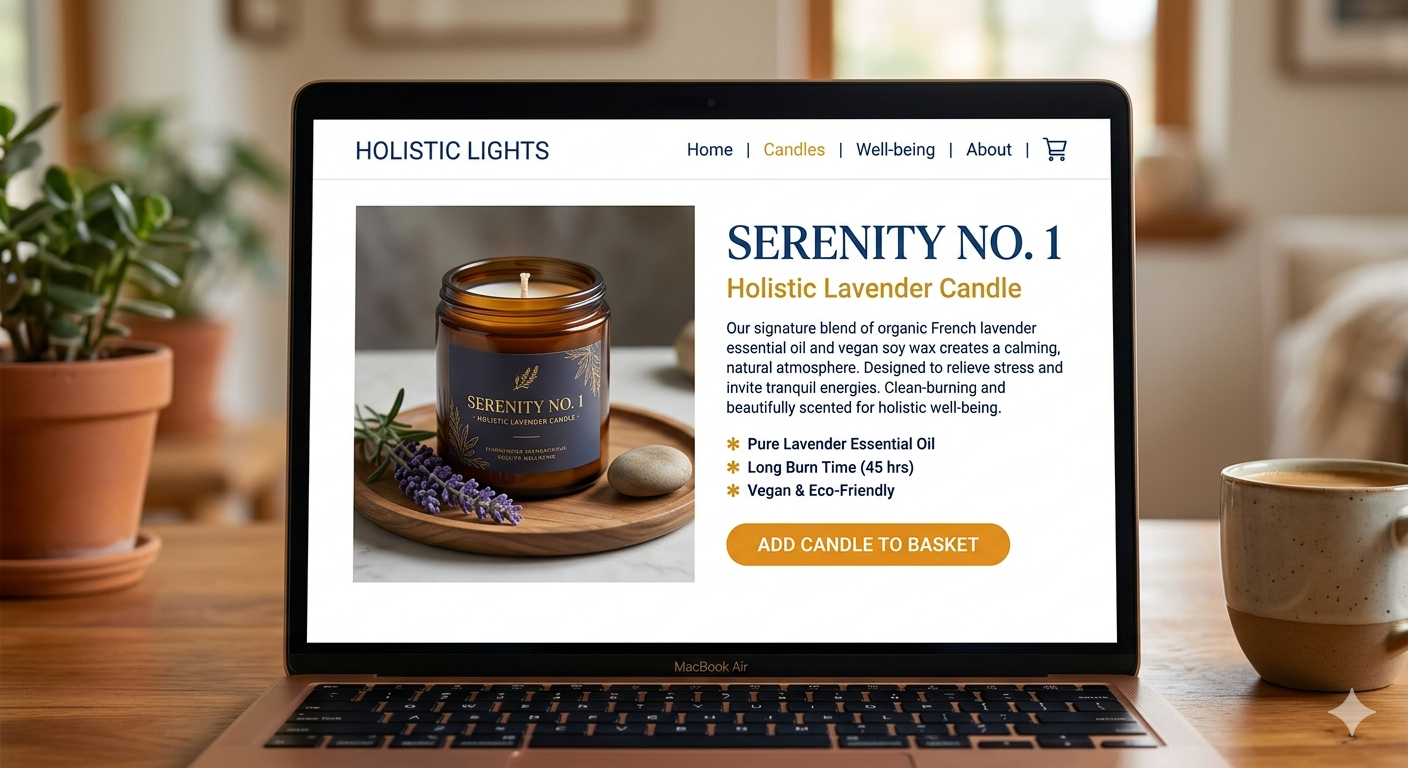
Let's be blunt about something. There's probably a version of your product page sitting right now at a decent ranking, getting reasonable traffic, and quietly bleeding sales because the copy is doing absolutely nothing. Not bad copy, necessarily. Just... copy. Words that exist. Manufacturer descriptions rephrased slightly. Dimensions listed. Stuff in a bullet list that nobody asked for. The hard truth is that most ecommerce businesses put enormous effort into getting people to the product page — ads, SEO, influencers , the lot — and then hand them a description that reads like it was written for a stock database. And then wonder why the conversion rate is stuck at 1.8%. Product description optimisation isn't really about writing. It's about removing every possible reason someone might not buy. Handle the objections. Build the trust. Make the decision feel easy. Do all of that while keeping Google happy, and you've got a page that works around the clock without you having to touch it. Here's how that actually looks in practice.
By Amy McGrath May 14, 2026
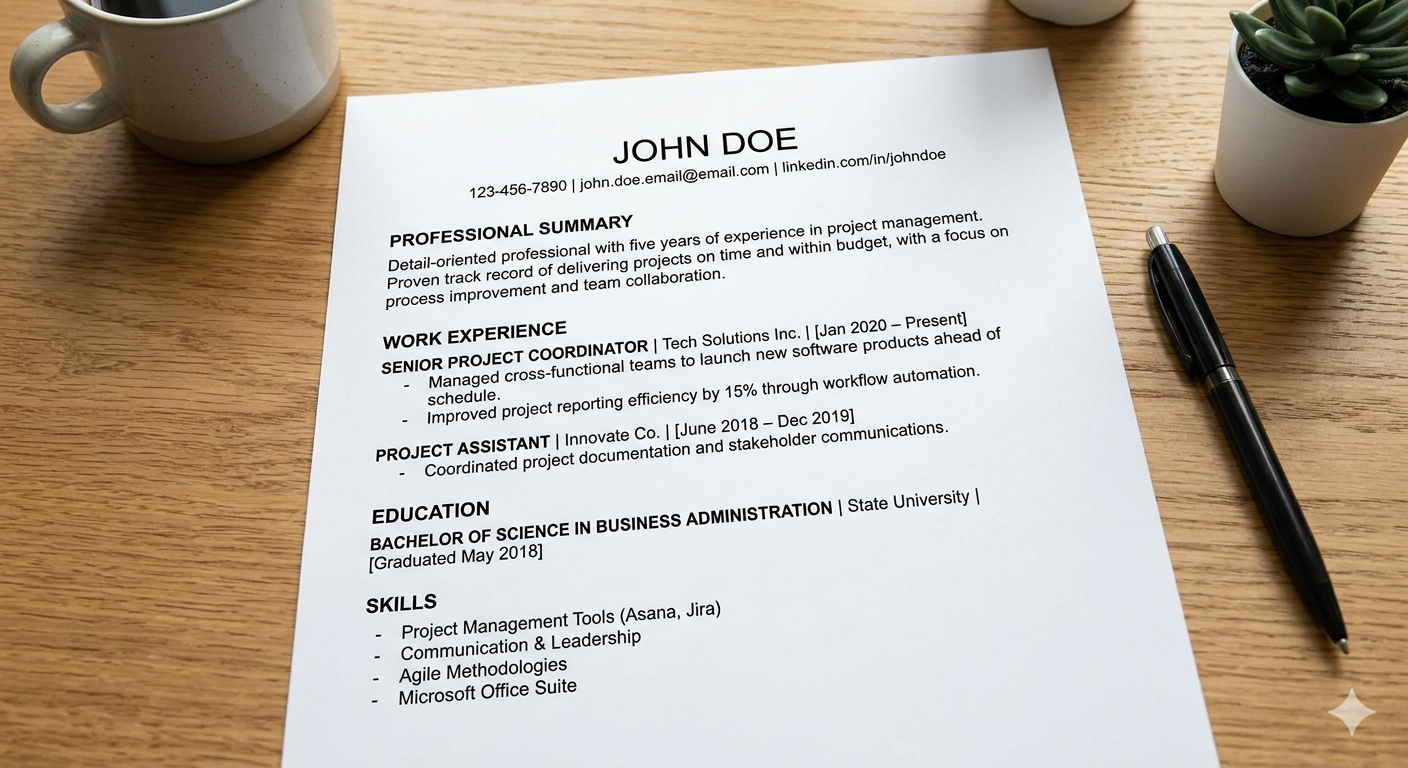
You spend ages on your CV. You tidy the font, rewrite the bullet points, move sections around and try to make everything sound sharper. Then you apply for a role that looks right for you and hear absolutely nothing back.  That silence can feel personal, but it is not always a sign that you are underqualified. Sometimes the issue is much simpler: your CV was not read properly by the system before a recruiter ever had the chance to look at it. Applicant Tracking Systems , usually shortened to ATS, are now part of normal online recruitment. They collect applications, extract candidate details, search for keywords and help employers shortlist faster. The important point is this: your CV now has two audiences. It has to be easy for software to scan, and it still has to sound clear, credible and human when a real person opens it. This guide walks through the practical bits that matter: layout, formatting, keywords, section headings and the simple checks you can run before sending your next application.
By Amy McGrath May 13, 2026
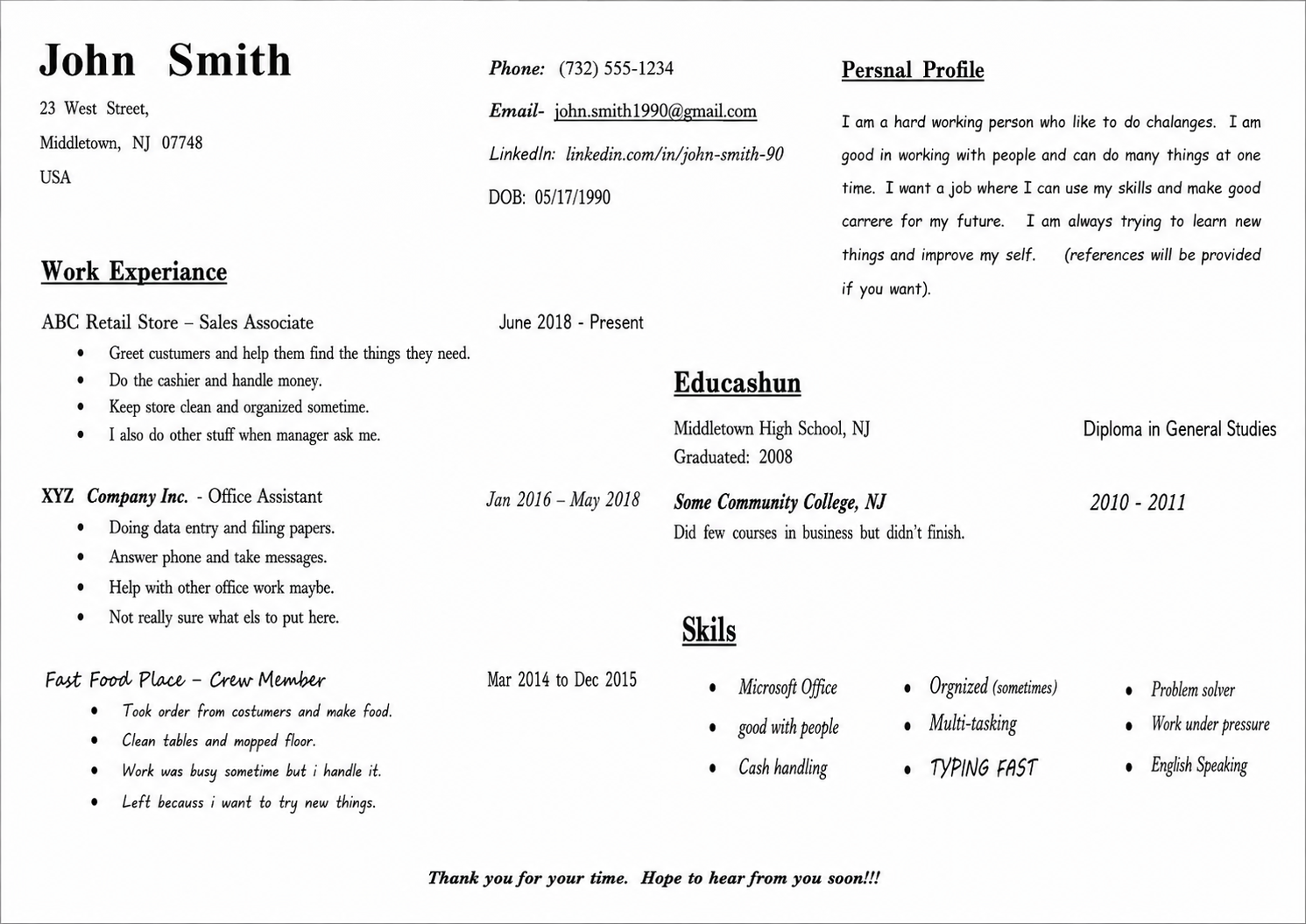
You've spent years building skills, climbing ladders, and collecting achievements. Then you condense it all into two pages — and hear nothing. That silence is the most common experience in modern job searching. According to Forbes, less than 3% of submitted CVs result in an interview. The problem, more often than not, isn't who you are. It's how your CV presents you. Here are 15 evidence-based fixes that make the difference.

By Amy McGrath May 8, 2026
Getting people to visit your website is only the first step. The real growth comes from what happens next: do they remember you, trust you, come back, sign up, enquire, buy, or recommend you?  Website traffic is valuable, but repeat attention is more valuable . A visitor who returns three, four or five times is far more likely to become a customer than someone who lands once and disappears. That is why smart brands build systems to keep in touch with visitors after the first click.

By Anthony McGrath May 8, 2026
Writing blog posts that increase site traffic is not about filling a page with keywords and hoping Google notices. Strong blog content works because it answers a real question, gives useful detail, and makes the reader want to stay, click, save, share, or enquire. Google describes good SEO as helping search engines understand your content while helping users decide whether they should visit your site. That means your blog post needs to serve both sides: the person reading it and the search engine trying to understand it.